Marshall the Pioneer Series: Part 2
The First MLB Player to earn a PhD in Kinesiology
Part 2 defines the turning point when science stepped onto the mound—when Dr. Mike Marshall’s kinesiology pitching mechanics first challenged tradition.
New to the Series? Check out Part 1: Biomechanics
Baseball Trusted Tradition. Marshall Trusted Kinesiology Mechanics.
While most pitchers followed coaching wisdom passed down through generations, Marshall earned a Ph.D. in Kinesiology — becoming the first MLB player to apply kinesiology to pitching.
He didn’t just want to throw harder—he wanted to throw smarter. And it all started with one moment in 1967 that changed everything.
The Moment That Changed Everything
How Kinesiology Pitching Mechanics Saved Marshall’s Career
High-speed video of Dr. Mike Marshall’s 1967 slider reveals a triceps flaw—launching his kinesiology pitching mechanics reform.
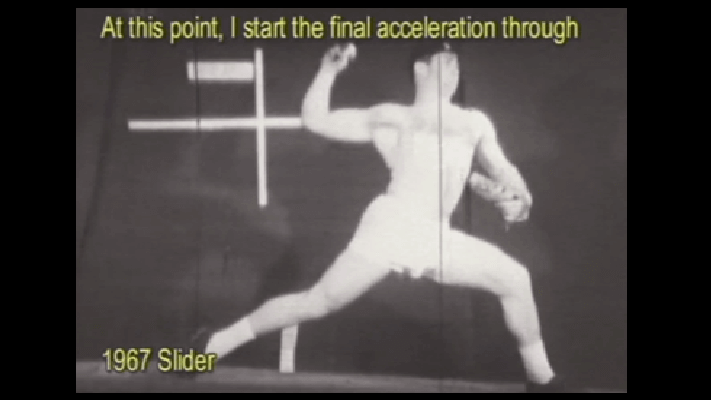
In 1967, Mike Marshall realized something was wrong. His pitching mechanics weren’t just inefficient — they were causing damage to his body.
That realization led him to apply his kinesiology expertise, where he uncovered the flaws in his own motion and began developing injury-free mechanics.
Marshall’s commitment to kinesiology wasn’t just about fixing his own mechanics—it was about redefining how pitchers could train safely for decades to come.
Dr. Mike Marshall’s Kinesiology Pitching Mechanics – The Turning Point
Watch Marshall explain the exact moment that changed his career and sparked his mission to eliminate pitching injuries.

Explore Dr. Mike Marshall’s full 90-minute presentation, divided into 7 parts: Click here
That moment didn’t just change his career — it set him on a path to help other pitchers avoid unnecessary injuries.
Marshall didn’t stop with self-correction—he applied kinesiology to help others perform safely, across sports.
- He modified his own mechanics for endurance, velocity, and injury resistance
- He analyzed Andy Messersmith’s severe elbow limitations, advancing kinesiology’s understanding of the long-term damage caused by traditional pitching mechanics
- He provided the kinesiology-based framework that guided Tommy John’s post-surgery transformation—restoring velocity, endurance, and career longevity
- He worked with Fran Tarkenton to improve his throwing mechanics—proving Marshall’s principles weren’t bound by sport, but by science
In the coming weeks, we’ll explore three key case studies that reveal how Marshall applied his kinesiology expertise—not only to his own motion, but to elite athletes across baseball and football. Each story offers a deeper look into how science became reform.
What He Discovered About Injuries and Pitching Mechanics
Marshall’s research led to groundbreaking discoveries, including:
- How traditional pitching mechanics cause arm injuries (Read Here)
- How to prevent pitching injuries (Learn More)
- How scientific training methods improve velocity, consistency, and performance (Explore His Training Programs)
These discoveries form the foundation of Dr. Mike Marshall’s kinesiology pitching mechanics—a system designed to protect pitchers before they break.
Baseball Fought Against Him
Marshall’s scientific approach challenged everything baseball believed about pitching. Instead of embracing his research, Baseball ignored, diminished, and blacklisted him.
Today, MLB teams rely on kinesiology — the very science Marshall used decades ago to improve his pitching and prevent injury.
Next in the Series: Part 3: Pronation
Marshall’s mission lives on.
Through Dr. Mike Marshall’s Pitching Academia, his kinesiology pitching mechanics continue to guide athletes toward safer, smarter performance.