Marshall the Pioneer Series: Part 5
The First to Develop a Wrist-Weight Training System for Pitchers
Part 5 reveals Dr. Mike Marshall’s wrist-weight training program — a structured, age-specific system designed to protect pitching arms and build the deceleration muscles, making velocity sustainable.
New to this Blog Series?
You can start from Part 1: Biomechanics or the Series Overview to explore other posts.
Dr. Mike Marshall Wrist-Weight Training Program
The Forearm, Wrist, and What Baseball Got Wrong
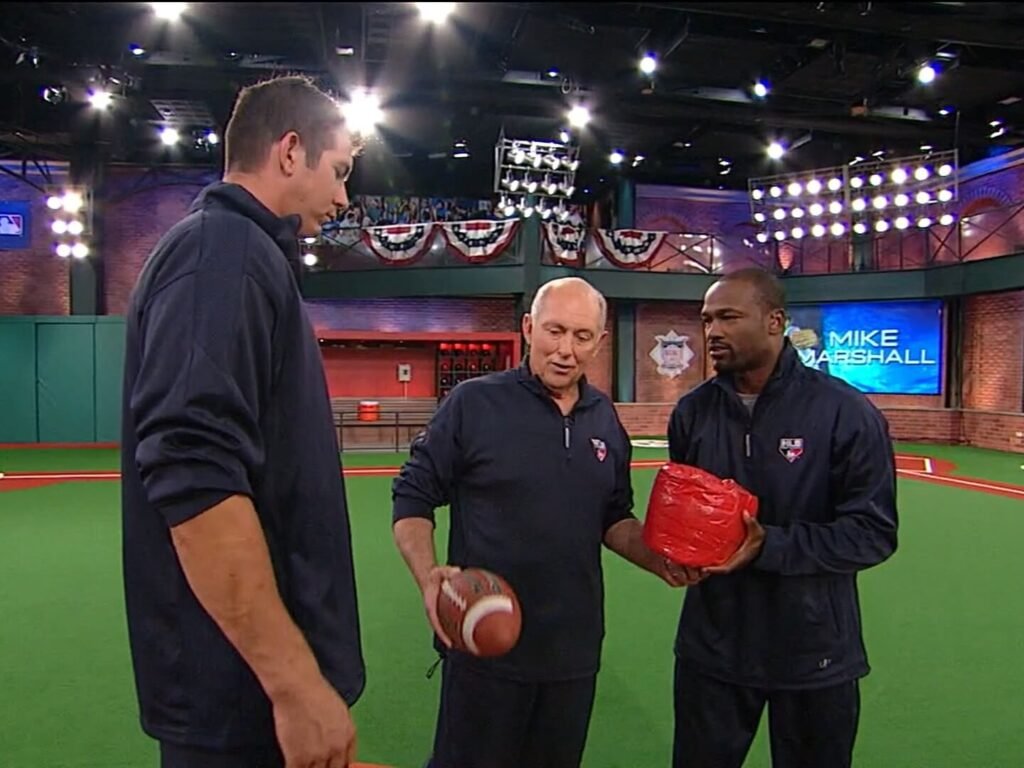
Baseball wasn’t ready for Dr. Mike Marshall’s wrist-weight training program. Marshall built it anyway. For decades, baseball believed weightlifting alone was enough for pitchers, without the need for forearm and wrist-specific resistance training. Pitchers were told:
- Targeted wrist and forearm training was unnecessary — general strength work was enough.
- Resistance training for the forearm would disrupt pitching mechanics, not improve them.
- The arm’s job was to throw. Protecting it was the trainer’s problem after the damage was done.
Marshall disagreed….and he was right.
Marshall's Wrist-Weight Training Origins
Decades ahead of his time, Dr. Marshall built a training system around a principle the sport had never considered — pitcher’s forearm and wrist stabilized high-speed arm movements, preventing unnecessary strain on the elbow and shoulder.
Marshall's Key Discoveries:
- Wrist weights trained the deceleration muscles — the ones responsible for safely stopping the arm after every throw, not just powering it forward.
- Forearm and wrist resistance, integrated within the pitching motion itself, built mechanical precision alongside strength.
- An age-specific progression — from 2.5 pounds at age 10 to 25 pounds for elite adults — protected growth plates while building durability at every stage.
Marshall's expertise didn't stop at the pitcher's mound
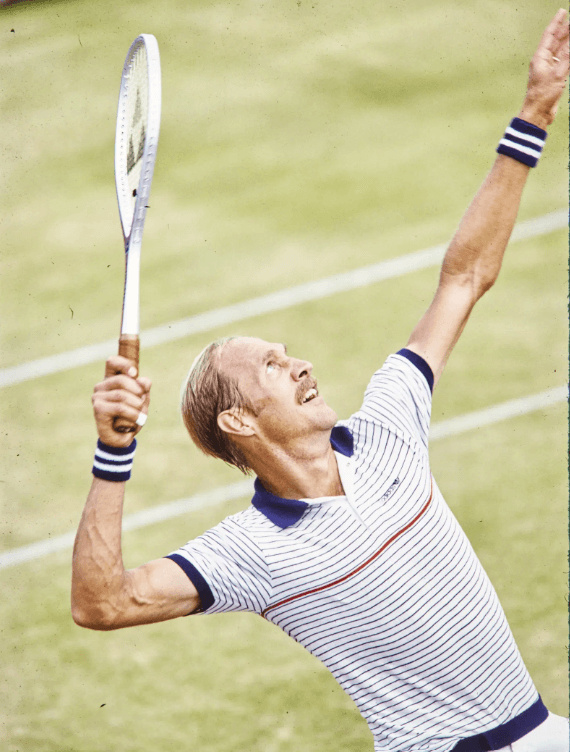
In the mid-1970s, Wimbledon and Davis Cup Doubles Champion Stan Smith came to Marshall for help with a torn extensor carpi radialis longus muscle in his forearm ……. the same extensor group Marshall’s wrist-weight program specifically targeted for pitchers.
- Marshall diagnosed the injury and identified the cause.
- Smith was incorrectly decelerating his tennis serves with the wrong muscles — and throwing with an extension-locked elbow on his backhand.
- Marshall’s prescribed fix: use the large shoulder muscles to decelerate the serve.
The same principle applied to every pitcher Marshall trained:
Fix the mechanics, and the arm takes care of itself.
🔗 Read more in Dr. Marshall’s own words: Chapter 17 — The Wrist Joint, from his online book Coaching Baseball Pitchers.
Mechanics Before Resistance — Every Time
Wrist-weight training without the right mechanical foundation is just added stress — amplifying dysfunction instead of correcting it. The program only works because the mechanics are right first.
The Marshall the Pioneer 7-part Series builds that foundation across three disciplines.
See below for what each one contributes — and why all three are non-negotiable before adding resistance.
Part 1: Biomechanics
Mechanics engineered for physics, not feel — the foundation every drill builds on.
Part 2: Kinesiology
Marshall’s routines activate the exact muscle chains the wrist-weight program trains.
Part 3: Pronation Mechanics
Marshall’s pronation safeguard built into every wrist-weight drill repetition.
Iron Balls & Wrist Weights: Motion-Integrated Resistance Training
Dr. Mike Marshall’s iron ball and wrist-weight programs were companion systems — built on the same biomechanical principles, designed to work together.
Part 4: Weighted Balls
The iron ball program trained the bones, ligaments, and tendons involved in accelerating the pitching arm.
Part 4 covers and science & philosophy in depth.
Part 5: Wrist Weights
The wrist-weight program trained the muscles responsible for decelerating it safely — and for executing each pitch with precision.
Read on to explore the program Marshall built.
The Science Behind Dr. Mike Marshall's Wrist-Weight Training
To Marshall, the question wasn’t how hard you could throw. It was whether your arm could stop.
“To increase their release velocities, pitchers must convince the cerebellum that their deceleration muscles can safely stop their pitching arms at increased release velocities. My plioanglos* wrist weight interval-training program increases the ability of the appropriate muscles to safely decelerate pitching arms to stops.”
— Dr. Mike Marshall, Coaching Baseball Pitchers, Chapter 36
* Plioanglos: Marshall’s term for braking muscle action — the joint angles across which contracting muscles operate increase. Dr. Marshall coined terms precisely because existing terminology didn’t capture what he observed.
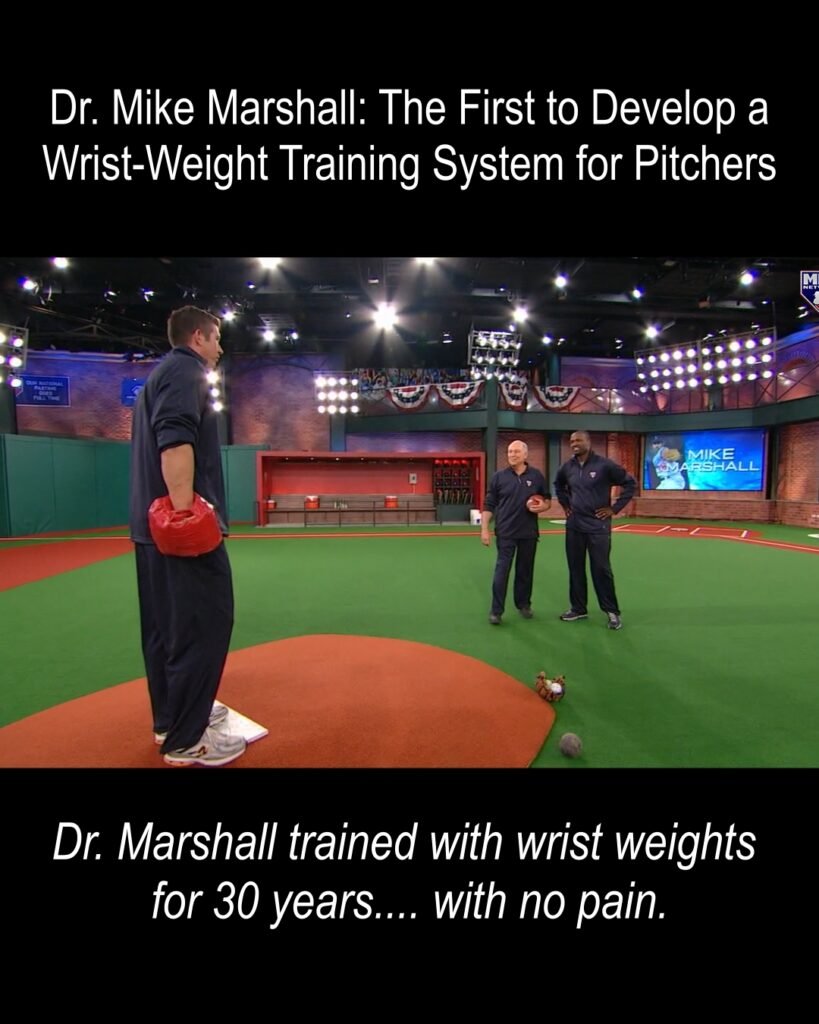
Most pitching coaches focused on arm speed — how fast the ball left the hand. Dr. Marshall focused on what happened after release: the deceleration phase that determines whether a pitcher’s arm survives the throw. His wrist-weight program was designed around a single insight that baseball had not yet grasped.
How Fast Can You Go If You Can't Stop?

Drag Race Analogy
“Suppose someone offered you the opportunity to drive drag race cars capable of achieving record velocities in one-quarter mile tracks. However, one hundred yards beyond finish lines are two thousand foot cliffs. How fast would you drive these race cars? You ask, ‘How fast can I go and have my brakes stop me within one hundred yards?”
— Dr. Mike Marshall, Coaching Baseball Pitchers, Chapter 32
The cerebellum works the same way; it caps throwing velocity at whatever deceleration muscles can safely handle. Marshall’s answer: build the brakes first. Stronger deceleration muscles don’t just protect the arm — they unlock it.
Wrist-Wrap Rationale
Why wrap weights around the wrist rather than just hold them?
The Problem with Barbells
Gripping a barbell forces the hand muscles to contract continuously — cutting off blood flow to the muscles that need it most.
The Problem Most Coaches Missed
Wrist-wrapped weights allow the hand and gripping muscles to intermittently relax, maintaining blood flow throughout the drill.
Why it Matters
The intermittent relaxations aren’t a design flaw — they’re the whole point. Dr. Mike Marshall, Coaching Baseball Pitchers, Ch. 32.
For the full science behind Marshall’s weighted resistance philosophy — including the biomechanical logic, proprioceptive feedback, and integrated mechanics — see Part 4: Weighted Ball Training
Dr. Mike Marshall's Wrist-Weight Training Program
A structured system — not a generic drill. Age-specific, mechanics-integrated, and built around the pitches pitchers actually throw.
Dr. Marshall’s wrist-weight program built a complete, sequenced training system tied directly to his pitching mechanics. Every element intentional.
- Age-specific weight recommendations — from 2.5 pounds at age 10 to 25 pounds for elite adults
- Pitch-specific forearm positions — each pitch type trained with the exact forearm position used at release
- A progression of drills — designed to build mechanical integrity before adding resistance
| Biological Age | Recommended Wrist Weight |
|---|---|
|
10-year-old youth pitchers |
2.5 pounds per wrist |
|
13-year-old youth pitchers |
5 pounds per wrist |
|
16-year-old high school pitchers |
10 pounds per wrist (mature medial epicondyle growth plate required) |
|
Adult / Elite pitchers |
Up to 25 pounds per wrist (fully mature skeleton only) |
⚠️ Marshall required X-rays to confirm growth plate maturity before advancing to heavier weights. This was a non-negotiable safeguard — not a suggestion. ⚠️
Pitch-Specific Forearm Positions
Marshall’s drills were not one-size-fits-all. Each pitch type required a specific forearm position during the drill — training the exact muscle actions the pitcher would use at release. Four pitch types, four positions:
- Maxline True Screwball — palm turned upward; drives the index-finger side of the middle finger through the top seam
- Maxline Fastball — palm upward with thumb inside, fingers vertical through release
- Maxline Pronation Curve — palm facing downward; little-finger side of the hand leads through release
- Torque Fastball — palm forward with thumb underneath, fingers pointing toward the head; horizontal drive through release
Watch the complete program — six drills with complete coaching cues — demonstrated in Dr. Marshall’s instructional video “06. Wrist Weights Training Program” on the Instructional Pitching Videos webpage.
Decades Later, Baseball Arrived at Marshall's Conclusions
Dr. Marshall didn’t patent his wrist weight, sell a branded program, or build a training facility empire. He posted his book and instructional pitching videos online for free. His mission was never commercial — it was to eliminate pitching injuries, particularly in young pitchers whose arms were being damaged before they ever reached their potential.
Marshall developed his wrist-weight program decades before baseball had the research to explain why it worked. Today, that research exists — and it confirms what he built.
Click each of the three tabs below.
Click each of the three italicized titles below.
A 2004 study published in the Journal of Strength and Conditioning Research examined 43 high school baseball players over 12 weeks. The group that added dedicated wrist and forearm training to their standard resistance program showed significantly greater strength gains across every measured variable:
- Wrist flexion improved by up to 27%
- Pronation improved by 12%
- Wrist radial deviation improved by nearly 27%
The conclusion: targeted forearm and wrist training produces strength gains that general weightlifting does not replicate.
That is precisely what Marshall’s program was designed to do — decades earlier, with an age-specific system baseball had not yet imagined.
In a 2002 Baseball Prospectus interview, Marshall described the daily training regimen at his facility:
- 144 throws per day — minimum 48 with wrist weights, followed by iron ball throws and baseball pitching
- Every day — no stiffness, no soreness, because the mechanics were correct
One of his students, Jeff Sparks, went on to pitch for the Tampa Bay Devil Rays:
- Before training with Marshall: barely over 80 mph
- After training with Marshall: 93 mph
Kyle Boddy, founder of Driveline Baseball, was directly influenced by Marshall’s work — and named his company after Marshall’s own concept: the “driveline,” the straight-line path from pitcher to home plate. What Driveline adopted from Marshall:
- Wrist weight training — now commercialized and sold as leather wrist weights to thousands of professional players
- “Train pronation safely” — Marshall’s principle, documented decades earlier
- “Reduce elbow dislocation risk” — Marshall’s rationale, now Driveline’s marketing language
Where Driveline diverged: Driveline’s broader approach has faced significant criticism from biomechanists and sports medicine physicians for prioritizing velocity metrics over mechanical integrity — particularly with youth pitchers. This criticism cuts to the heart of what Marshall always warned:
- Weighted resistance without sound mechanics doesn’t protect arms. It amplifies dysfunction.
- His wrist-weight program was not a velocity shortcut — it was the last step in a system that required mechanics to be right first
- When that sequence gets inverted — weight before mechanics — the results are exactly what today’s injury epidemic reflects
Source: Society for American Baseball Research (SABR) biography on Dr. Marshall
Marshall’s mission lives on.
Through Dr. Mike Marshall’s Pitching Academia, his wrist weight training philosophy — grounded in age-specific progression, pronation, and safe deceleration — continues to guide how pitchers protect their arms today.